
Neukölln as a Learned Battlefield
Sonne und BetonThis thread follows Lukas’s changing understanding of his neighborhood as a place where ordinary routes, public spaces, and social encounters become organized by vigilance and threat.
increasing Bearing strength in each event
 decreasing
Bearing strength in each eventdecreasingA Familiar Landscape of Unease
A Familiar Landscape of Unease
The neighborhood in passing
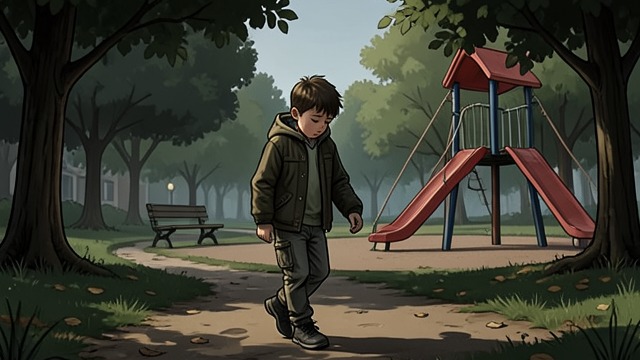
After skipping school, Lukas walks through the housing blocks and notices their mismatched colors, the people drinking by the playground, and the adults who seem unhappy. The landscape is familiar, but he reads it as evidence of a future he hopes to avoid: sitting on a worn playground bench and drinking away his life.
His observations are not a detached portrait of the area. They show how poverty and neglect enter his ordinary thoughts, making the buildings and public spaces feel like part of the limited future available to him.
A place already mapped by risk
Lukas also measures routes by who might be waiting there. He wants to avoid the groups near the front of the park, knows where people sell drugs, and understands that being seen in the wrong place can prompt questions or conflict.
The neighborhood is home, but it is not neutral ground. Lukas’s knowledge of it is practical, built from anticipating encounters before they occur.
The Park’s Unwritten Boundaries
The Park’s Unwritten Boundaries
A route becomes a provocation
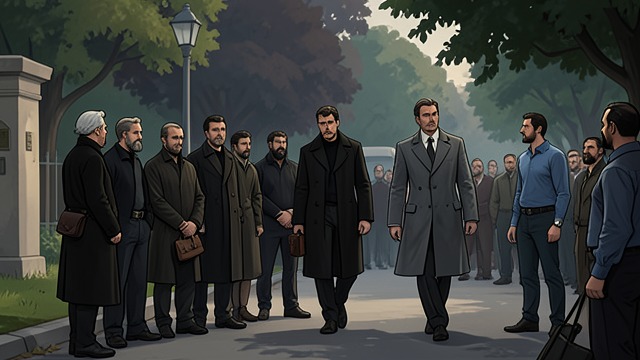
Lukas does not want to cross the park because he expects to pass a group of men who sell drugs. Julius walks ahead despite the warning, and when a dealer calls after them, Lukas tries to keep going without engaging.
The park has an unwritten purpose in Lukas’s understanding: people do not simply linger there without attracting notice. Refusing an offer or choosing a route is therefore not just a private decision; it can be interpreted as disrespect by people who claim the space.
The boundary turns violent
Julius answers the dealer, tries to explain, and insults another group of men in the process. Djamel then confronts Lukas and beats him while the others watch. What began as an attempt to walk through the park becomes an encounter in which each move is judged as a sign of allegiance or contempt.
Lukas’s later account of the assault makes the space feel even more dangerous: bystanders saw what happened but did not intervene, and he expects retaliation if anyone tries to answer the attack.
The Subway as Temporary Refuge
The Subway as Temporary Refuge
Escape through familiar infrastructure
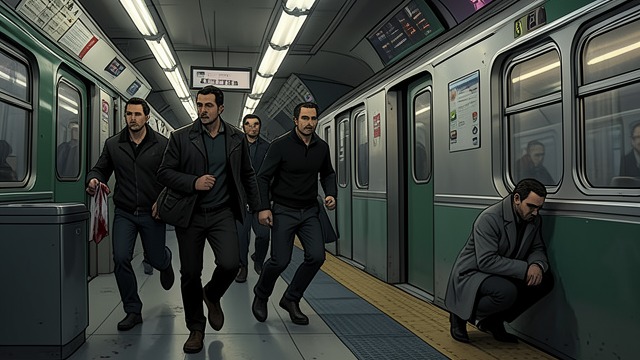
Lukas runs from the park and reaches the subway, using the train to put distance between himself and the fight. Even there, he studies other passengers and worries that the boys might recognize him or belong to the same school.
The train offers movement without certainty. When Lukas realizes that Djamel’s group is rushing toward the station, he hides from the windows and waits, convinced they may kill him if they find him.
Safety measured in seconds
The doors close just as the group reaches the train, carrying an injured Djamel. Lukas watches them strike the doors and spit at the departing carriage. His relief rests on timing rather than any lasting protection.
The scene reveals how public transport can briefly interrupt a neighborhood’s threats without erasing them. Lukas can move through the city, but danger remains close enough to appear at the next stop.
Routes Rewritten by Rumor
Routes Rewritten by Rumor
A schoolday becomes exposure
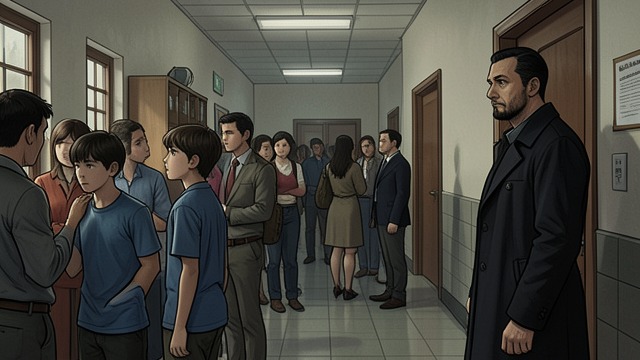
During the failed attempt to sell a computer, Lukas sees Taner outside the shop and runs with the stolen goods. Later, Momo tells him that Taner is telling students Lukas tried to sell the school’s computers.
Lukas’s fear expands beyond the streets where the theft occurred. The school, a place he already attends uneasily, becomes another space where a glance or rumor can expose him to teachers, police, and peers.
Ordinary movement turns suspicious
When Lukas returns to school, students whisper and call him names, and police officers appear in the building. He reads every look as a possible sign that someone knows, while Sanchez urges him not to treat suspicion as proof.
The changing routes are emotional as much as physical. Lukas wants to leave, avoid attention, and reach the friends holding the remaining computers, but every ordinary movement now feels like a decision made under surveillance.
The Neighborhood Enters the Home
The Neighborhood Enters the Home
Competing pictures of danger
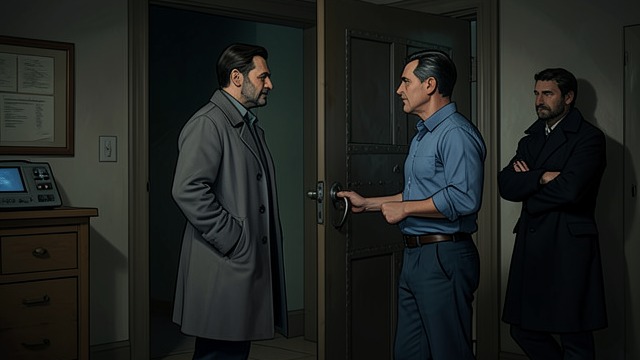
Lukas’s father asks about the burglary after reading the news, but Lukas insists that violence and theft happen routinely at school and in the neighborhood without attracting the same attention. Matthias resists the account, treating Lukas’s language and fears as imported street bravado.
The argument shows how the same place can mean different things to different generations. Matthias remembers a version of the area that seems manageable to him; Lukas sees immediate threats that shape how he travels, speaks, and decides whom to trust.
No easy boundary
Lukas leaves after the quarrel, refusing to keep explaining himself to a father who does not believe him. Yet the neighborhood’s violence does not stay outside the apartment: it structures their relationship and makes home another place where Lukas expects to be misunderstood.
The book’s title image of sun and concrete holds both sides of this experience. The place contains ordinary beauty and familiarity, but the concrete environment also frames a life organized by danger, poverty, and constrained choices.
On Lukas’s walk from the station toward the blocks
That morning, crossing the park to find Cem
Minutes after the park gang fight
After Taner identifies Lukas at the computer shop
After Lukas’s argument with Matthias about the burglary
